In LTL freight, the quoted rate depends heavily on freight class and NMFC information. If the NMFC code, class, density, weight, dimensions, or commodity description is wrong, the carrier may reclass the shipment and issue a rebill.
A rebill does not always mean the carrier made a mistake. Often it means the shipment did not match the information used for the original quote.
What is NMFC?
NMFC stands for National Motor Freight Classification. It helps carriers classify commodities based on characteristics such as density, handling, stowability, and liability. Many LTL quotes require a commodity description, NMFC item number when available, freight class, weight, dimensions, and packaging type. You can start with our free NMFC lookup tool.
Why wrong NMFC or class causes rebill
If a shipment is quoted as class 70 but the carrier inspects it as class 125, the price can increase. The same can happen if the dimensions are understated or the commodity description is too vague.
- Wrong freight class
- Incorrect NMFC item
- Weight mismatch
- Dimensions not including pallet size
- Commodity described as "general merchandise" instead of the actual item
- Non-stackable freight not disclosed
- Oversized or fragile freight not disclosed
Density matters
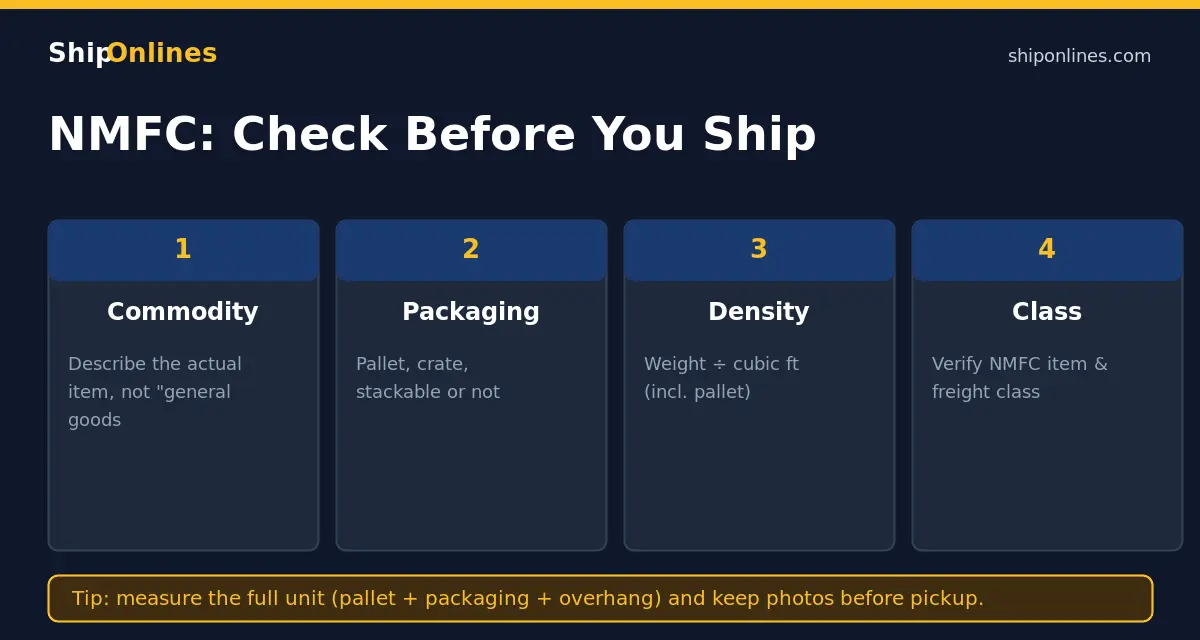
For many commodities, density affects freight class. Density is based on weight and cubic feet. If the pallet is larger than expected or lighter than expected, the class may change. Always measure the full shipping unit, including pallet, packaging, and overhang.
How to reduce reclass and rebill risk
- Use accurate pallet dimensions
- Use actual weight including pallet/packaging
- Describe the commodity clearly
- Check NMFC/class when available
- Disclose non-stackable, fragile, hazmat, oversized, or high-value freight
- Keep photos of packed pallets before pickup
A rebill is just one of several ways an LTL bill comes back higher — see the full list in why your LTL bill comes back higher.
Use NMFC lookup as a starting point
A lookup tool can help identify possible NMFC/class information, but final classification may depend on exact commodity, packaging, density, and carrier rules. When in doubt, ask before booking. Ready to ship? Get an LTL freight quote with accurate class and dimensions.
NMFC codes and freight classes shown here are a reference estimate — the carrier makes the final classification based on the actual commodity, density, packaging, and NMFC rules. For an accurate LTL quote, prepare your origin/destination ZIP, commodity, weight & dimensions, and pallet count.
Get LTL Quote → NMFC & Class Lookup Address Checker